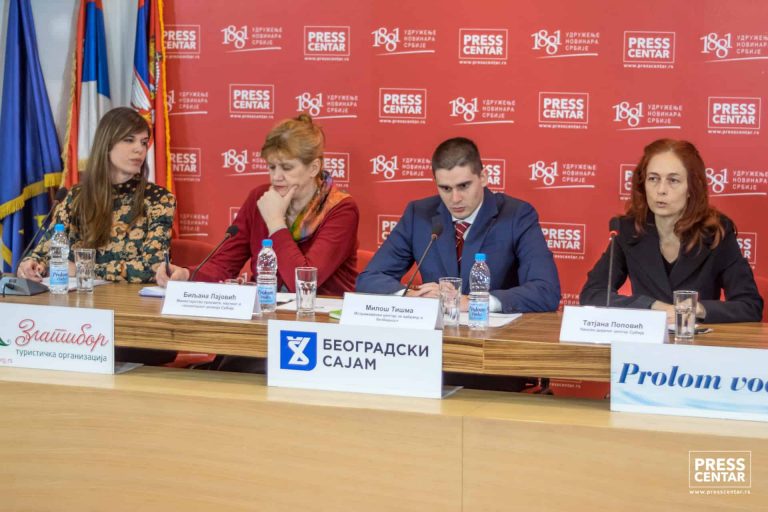
The Defense and Security Research Center conducted a survey on “Interethnic Distance, Violence and Violent Extremism Leading to Terrorism”. The research was conducted in five multiethnic municipalities. It encompassed the population of primary and secondary schools in Subotica, Sombor, Novi Sad, Backa Petrovac and Bujanovac. A total of 900 students were examined. The Ministry of Education, Science and Technological Development supported this research. Some of the results of this research are alarming, and above all, the interethnic distance is 20 years after the disintegration of Yugoslavia and is still high. The greatest distance is towards Roma and Albanians, and also Albanian children towards all other nationalities. The pupils responded in most cases that they do not want to socialize with Roma and Albanians or to have closer emotional relationships with them. This indicates the deep divisions that exist in the school period, which is unacceptable if we think that we are building a complex and democratic society in the future. The second part of the research concerned violence against schools, extremism and terrorism. As an organization dealing with security, it was important for us to determine how young people are related to violent behavior, weapons, and whether they know what terrorism is. The research showed that as much as 51% of students were violent, whether in a verbal, physical or some other way, but certainly this issue is worrying, because it is more than half of the pupils. Also, 7% said they own a cold weapon, and 12% said they wanted to buy it. We have already 17% of respondents who have struck someone and 5% who would be violent towards teachers, and 14% are sometimes exposed to harassment by other young people at school or in leisure. While only 35% said they trusted the police and as many as […]

From January 27 to 29, 2018 the training “Security and Mediation” in cooperation with Nansen Dialogue Center Serbia took place during three days. Throughout the practical and theoretical work participants were introduced to the concepts of extremism, radicalization, suppression and prevention of violent extremism, dialogue and mediation. to which the participants achieved high results, certificates were awarded.
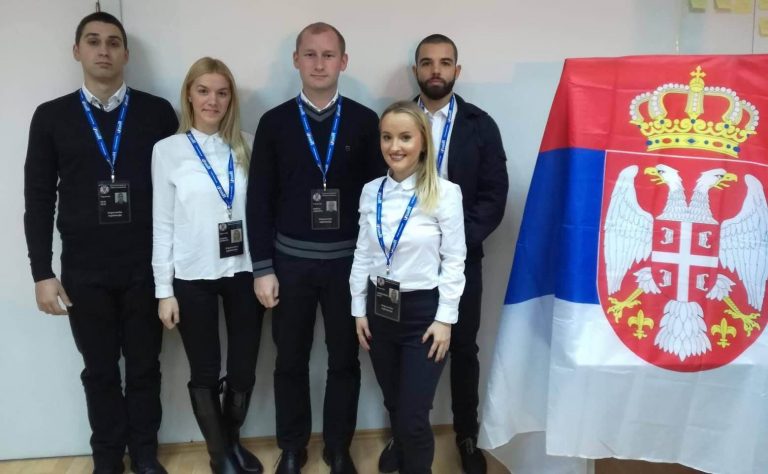
The contest for trainees 2017/2018 has been completed. 153 candidates applied for the competition, of which 60 candidates were shortlisted. Through the selection process of 60 candidates, 5 were selected based on the security knowledge test, as well as several interviews with the competition commission. We present you selected candidates: Trainee journalist – Igor Pejić, Master of Terrorism, Organized Crime and Security. Niš. Trainee in the IT sector – Nikola Đorđević, an apsolvent at the Criminal Police Academy. Belgrade. Trainee in the Secretariat – Sandra Mitrović, an apsolvent at the Faculty of Security. Požarevac. Trainee in the Secretariat – Aleksandra Savić, a student of master studies in the interior at the Faculty of Law, University of Novi Sad. Valjevo Trainee in the training sector – Djordje Jovanovic, student at the Law Faculty of the University of John Nezbit. Belgrade. We thank all candidates for their interest and we invite them to follow future competitions for ICOB, as well as for the magazine “Defense and Security”.
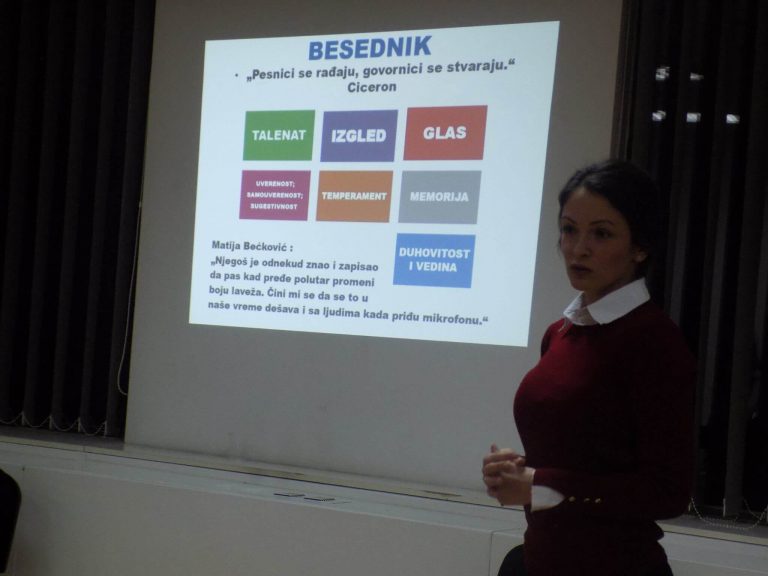
We are very pleased to publish photos from the first professional training for lecturers-educators. In the past three weeks, we worked together on skills of public appearance, knowledge transfer, dialogue and interaction, and the result was successfully passed the exam for educator-educators. We especially thank the Nansen-Dialogue Center at a lecture and workshop on dialogue and negotiation, as well as Filip Čolaković, in front of the National Development Academy at an interactive public appearance workshop and our special guest from Republika Srpska Ljubiša Acimović. The training lasted for three weeks and consisted of two lectures, four workshops and examinations before the five-member, expert commission. We would like to thank all the participants of the trust and we hope that the future participants of this training will be as successful as they are. [av_gallery ids=’1708,1702,1701,1707,1706,1704,1705,1703,1709,1710,1711,1712,1713,1714′ style=’thumbnails’ preview_size=’portfolio’ crop_big_preview_thumbnail=’avia-gallery-big-crop-thumb’ thumb_size=’portfolio’ columns=’5′ imagelink=’lightbox’ lazyload=’avia_lazyload’ admin_preview_bg=”]
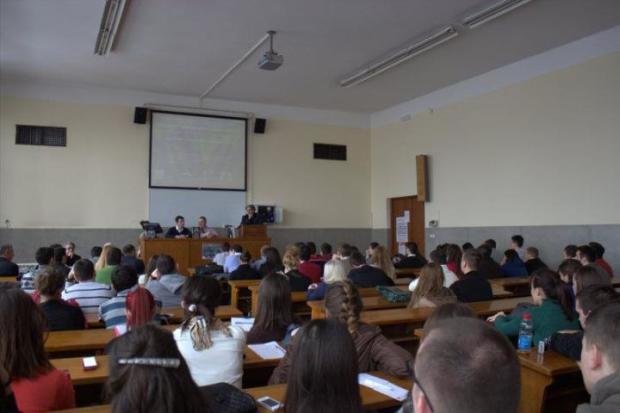
OpenLink Group in cooperation with the Law Faculty of the Belgrade University and the Student Association for International Cooperation is organizing a one-day seminar entitled “Challenges of Cybercrime and Information Security”, with emphasis on protection of users’ rights and intellectual property rights on the Internet. Speakers and topics: Igor Franc, head of digital forensics and information security at the International Institute for Security What is the difference between authentication and authorization What is social engineering and how he was protecting What is BYOD concept What are the basic concepts of cryptography How to properly destroy data that you no longer need Vladimir Marinkov, a lawyer from the law office Guberina-Marinkov All forms of cyber crime in our legal system Process specific features and legal basis Course of the proceedings for criminal offenses in the area of FTC from practice Problems encountered in the procedures related to the FTC Zarko Ptiček, IT lawyer from consulting firm Ptiček Ltd. What are the different legal relationships using the Internet based services How to protect users’ rights How to recognize a violation of personal rights How to protect the intellectual property rights on the Internet Openlink Group
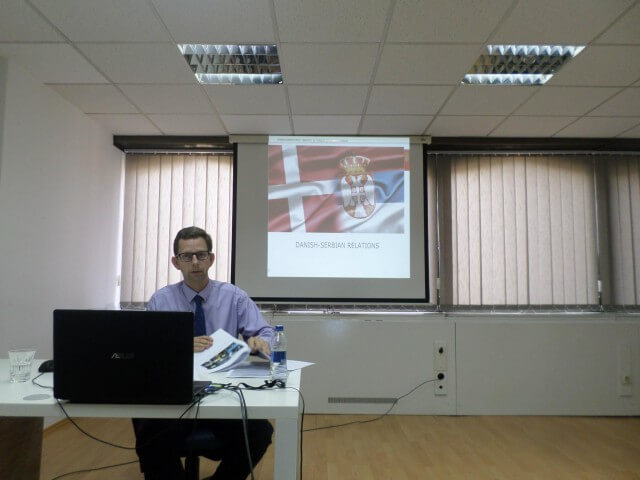
Research Center for Defense and Security in cooperation with the City of Belgrade, has successfully organized 24 lectures in the hall for presentation of the Palace of Belgrade. Guest lecturer: Deputy Ambassador of the Kingdom of Denmark, Mr. Morten Skovgaard Hansen The topic: International Cooperation of the Kingdom of Denmark and Serbia. After the lecture g. Morten Skovgaard Hansen was presented with a plaque for cooperation and contribution to the Center. https://www.facebook.com/DenmarkInSerbia
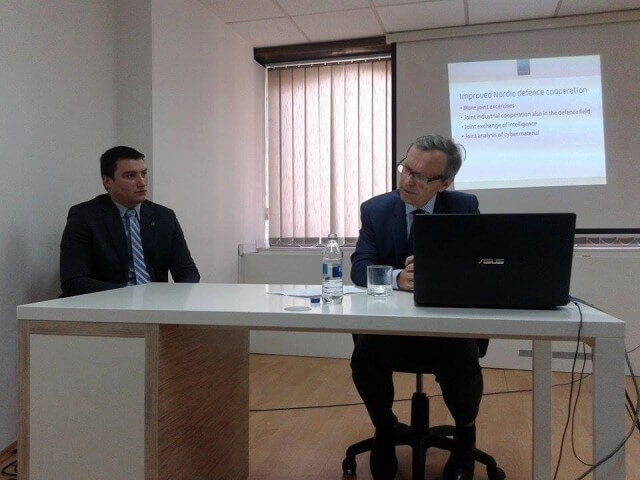
Research Centre for Defence and Security in cooperation with the City of Belgrade, has successfully organized 23 lectures in the hall for presentation of the Palace of Belgrade. Guest lecturer: Ambassador of Norway HE Nils Ragnar Kamsvag lecture topic: Regional cooperation and challenges in the region. “Cooperation is essential for the future stability and peace in the region, the Arctic and Barents, even more than in the past. Arctic was the focus of superpower rivalry during the Cold War with the Nordic countries. Despite the tense situation during the Cold War in this strategically important area, Norway has managed to maintain a stable and constructive relationship with the Soviet Union – today’s Russia. After the lecture HE Nils Ragnar Kamsvag was awarded the medal for cooperation and contribution.
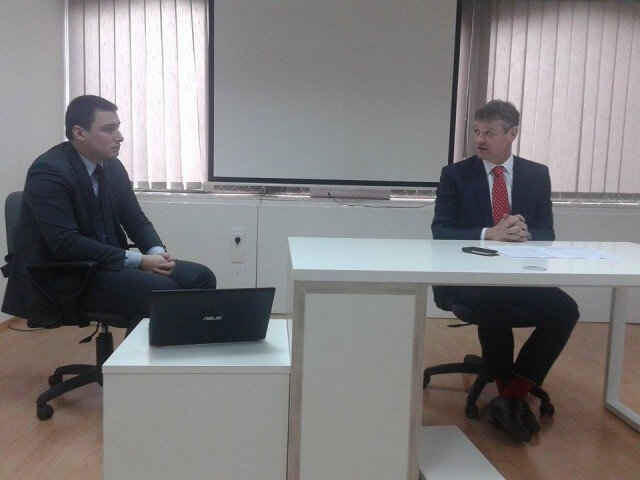
Research Centre for Defence and Security successfully organized 21 lectures in the Palace of Belgrade within the project: “Security Dialogue” on bilateral relations between Switzerland and Serbia. And Guest Lecturer: HE Swiss Ambassador Jean Daniel Rush Research Centre for Defence and Security successfully organized 21 lectures in the Palace of Belgrade, within the project: “Security Dialogue”. Guest lecturer: Swiss Ambassador Jean-Daniel Rush “As Serbia, Switzerland is multicultural society. We have a lot in common and a significant number of links between us. Our society is associated with numerous marriages of our citizens; tens of thousands of Serbian citizens in Switzerland. In Serbia there are a large number of Swiss nationals. These human connections more force and substance our relationships. Government of Switzerland and Serbia are partners in many fields and consecutive will chair the Organization for Security and Cooperation in Europe (OSCE) in 2014 and 2015. Our economic ties are on the rise, and I’m proud to underline that Switzerland is one of the most important investors in the Republic of Serbia. ”
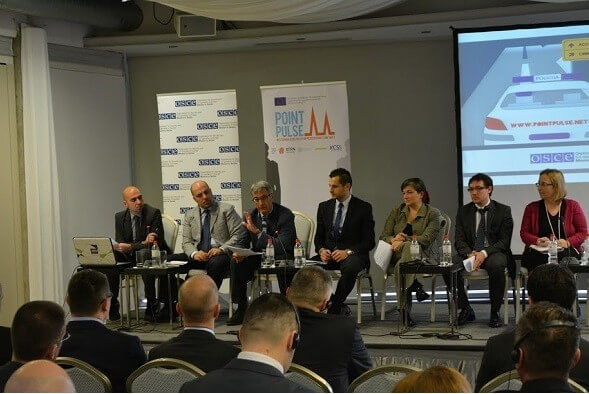
The regional network of civil society organizations POINTPULSE in cooperation with the OSCE Mission in Serbia organized in Belgrade conference on the integrity of the police with the aim to bring together all relevant actors involved in police reform in the Western Balkans. The conference was at the invitation of host attended by representatives of the Research Centre for Defence and Security and Milos Maric Aleksandar Tišma. Common problems of the region are inadequate operation of internal control of the police and the fact that there is adequate cooperation between the internal control with the actors who perform external control, such as Parliament. Another common problem is the inadequate management of human resources, which is characteristic for the entire state administration, and not just for the police. It is good that all the communities in the region detect these problems, and have begun reforms to build a police force that will be responsible to do their job. The third problem that affected the police in the region is the lack of operational independence of the police from the ruling parties. The conference was divided into three panels, each of which covered topics that are, at present, according to the network POINTPULSE, the most relevant for the police in the region. Speakers were police officers from the region and representatives of the EU Delegation in Serbia, OSCE as well as independent police experts. More information: Belgrade Centre for Security Policy

During the preparation of programs for educational purposes in the field of civil protection, the Academy of National Development and Research Centre for Defence and Security, spotted the problem of insufficient information of citizens in signs of distress. Given the seriousness and importance of the information to be transmitted via an audible citizens in case of emergency or other circumstances, it was decided that, with joint efforts, the two CSOs prepare and distribute the necessary information materials that will be interested will be able to freely download and excel in buildings and other public areas and facilities of public importance. The organizers of this action, consider that this is one of the ways in which civil society organizations can be a very simple and important way to contribute to public safety in the hope that the public will recognize this and similar initiatives as well as to demonstrate that in the civil sector there are NGOs working on the benefit of the community. During the first day of action has been reported as satisfactory interest representatives Assembly tenants who are looking for these materials. The organizers, who have made this initiative was financed with own funds CSOs. On the occasion of the start of the representatives of the Research Center for Defense and Security Academy and National Development, Mr. Miloš Tišma and Filip Čolaković, they sent a further call other civil society institutions and representatives of the citizens to get involved. Given the reports of individual bodies also stressed the importance of functioning of the system of observation and information, the organizers are confident that the course of action to be distributed about 1,000 information posters. Organizers say that to get free posters can be reached by contacting the organization via the Internet.